What Should You See in Saudi Arabia? 15 Amazing Places to Visit
From Hegra and AlUla to Riyadh, the Red Sea, and the green mountains of Aseer—discover 15 of Saudi Arabia's most exciting places.
Published:16 min read
Written by Saudi Reiser
From 2,000-year-old tombs and historic cities to dramatic mountains, vast deserts, and the coral reefs of the Red Sea.
What should you really see when traveling to Saudi Arabia?
For many Norwegian travelers, the country is still relatively unknown. But behind the image of an endless desert lies a destination with surprisingly vast contrasts.
Here, you can wander among more than 2,000-year-old tombs, explore historic trading towns, stand on the edge of dramatic cliffs, hike through green mountain areas, and snorkel among coral reefs in the Red Sea.
You can experience modern Riyadh one day and sit under a vast starry sky in the middle of the desert the next.
Saudi Arabia is large, so you rarely get to see everything in one trip.
That's why we've gathered 15 of the most exciting places to visit in Saudi Arabia—from famous highlights like AlUla and Jeddah to areas many Norwegian travelers have yet to hear about.
1. AlUla – Saudi Arabia's Spectacular Desert Oasis
If you've only seen one picture of Saudi Arabia as a tourist destination, there's a high probability it was taken in AlUla.
AlUla is located in the northwest of the country and is surrounded by dramatic sandstone mountains, desert, ancient settlements, and archaeological sites.
For centuries, the area was a vital hub along ancient trade routes.
Today, AlUla has become one of Saudi Arabia's most important travel destinations.
Here, you can experience things like:
Hegra
AlUla Old Town
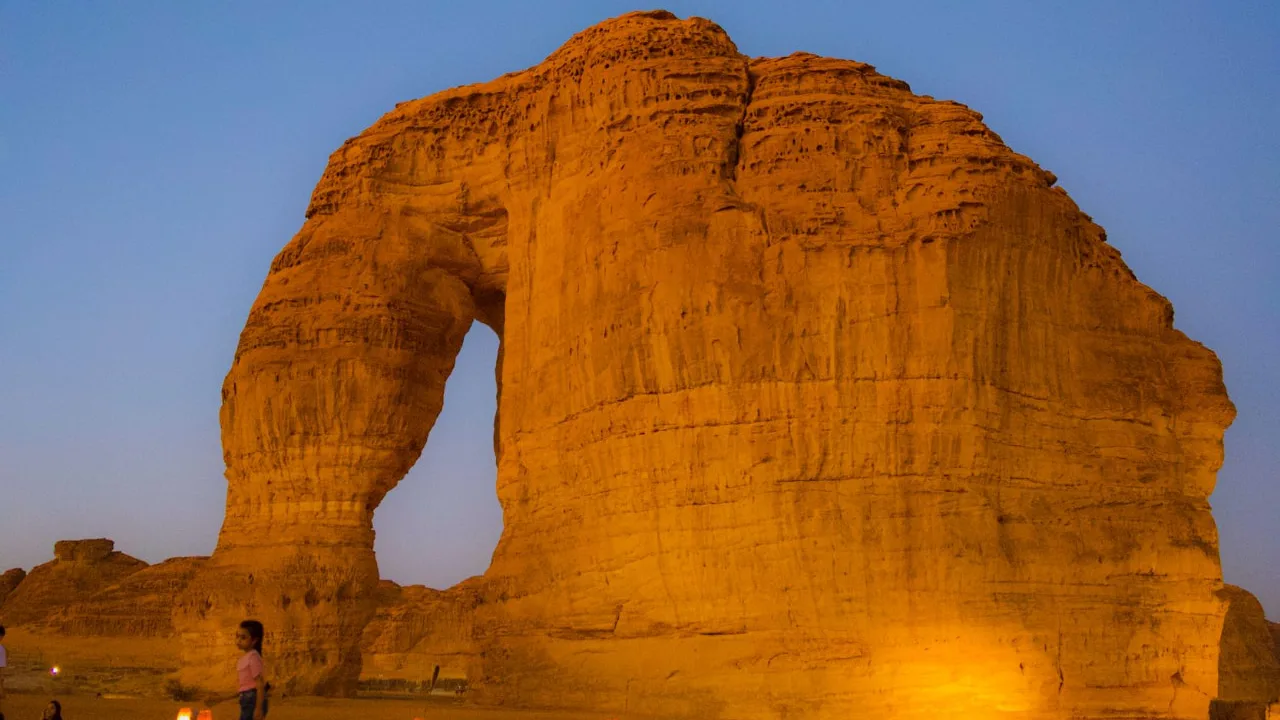
Elephant Rock
Dadan
Jabal Ikmah
Maraya
desert tours
stargazing
hiking
exclusive restaurants and resorts
It's the combination of nature, history, and modern tourism that makes AlUla so special.
We recommend at least two to three nights if AlUla is part of your itinerary.
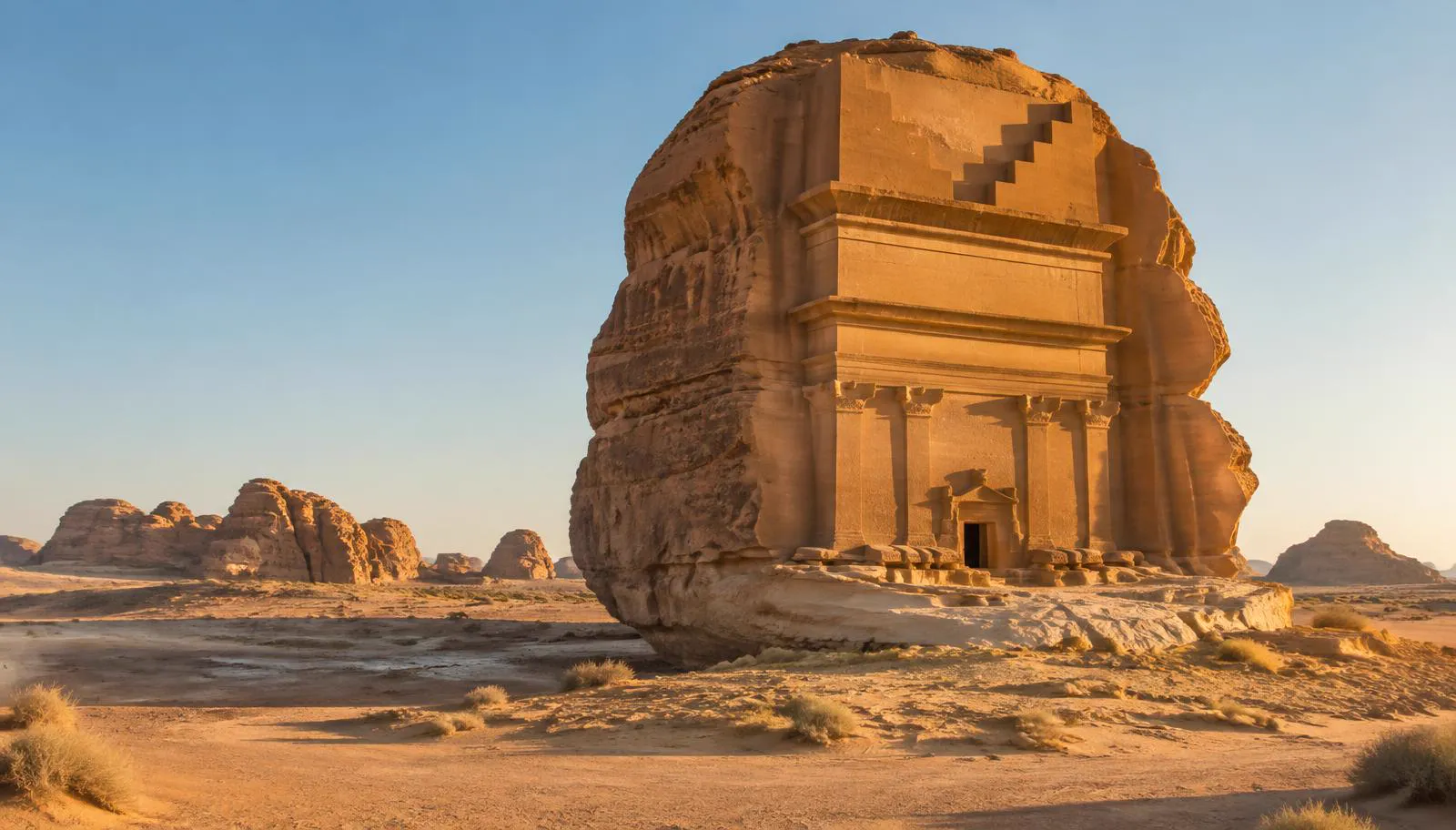
2. Hegra – Saudi Arabia's First UNESCO World Heritage Site
Hegra is located in AlUla but deserves its own spot on the list.
Hegra was an important city in the Nabataean kingdom, the same civilization associated with Petra in Jordan.
Here, there are more than a hundred monumental tombs carved directly into the sandstone mountains.
Many of the facades are still impressively well-preserved.
Perhaps the most photographed monument is Qasr Al-Farid—'the lonely castle'—which stands alone in the desert landscape.
Visiting Hegra with a guide makes the experience significantly more interesting, as the history, symbols, and architecture can otherwise be difficult to interpret on your own.
For history enthusiasts, this is undoubtedly one of the most important sights in Saudi Arabia.
3. Riyadh – The Modern Saudi Arabia
Riyadh is the capital of Saudi Arabia and a city undergoing enormous development.
Here, you get a completely different picture of the country than in AlUla.
Skyscrapers, new districts, restaurants, shopping malls, and large cultural and entertainment projects stand side by side with historic palaces, markets, and older neighborhoods.
Some current highlights are:
Kingdom Centre
Masmak Fortress
National Museum
Souq Al Zal
modern restaurants
traditional Saudi dining experiences
Diriyah
Riyadh Season when the event is on
Riyadh is also a good starting point for excursions in the area around the capital.
For first-time travelers, two to three days can be a good starting point.
4. Diriyah and At-Turaif – Where the Saudi State Began
Not far from central Riyadh lies Diriyah.
This is one of the most historically important places in the country.
The At-Turaif district was the first capital of the Saudi dynasty and is today a UNESCO World Heritage Site.
The architecture is built in the characteristic Najdi style, with earth-colored buildings, courtyards, and narrow passages.
In recent years, the area around historic At-Turaif has developed into an attractive area with restaurants, cultural offerings, and meeting places.
Diriyah therefore works very well as a combination of history and a pleasant evening out.
It is easy to combine with a stay in Riyadh.
5. Edge of the World – Dramatic Nature Outside Riyadh
About 100 kilometers from Riyadh, you will find one of the country's most famous natural viewpoints.
The name says a lot:
Edge of the World.
Here, the Tuwaiq escarpment stops abruptly in enormous cliffs with views over a landscape that seems to stretch to the horizon.
When you stand on the edge, it can actually feel like the world ends right in front of you.
The area is popular for:
hiking
photography
sunsets
desert excursions
picnics and traditional 'keshta'
The roads for the last part can be challenging, and there are few or no services in the area.
We therefore recommend visiting Edge of the World as an organized tour or with an experienced local driver and a suitable vehicle.
This is a perfect contrast to the modern city life in Riyadh.
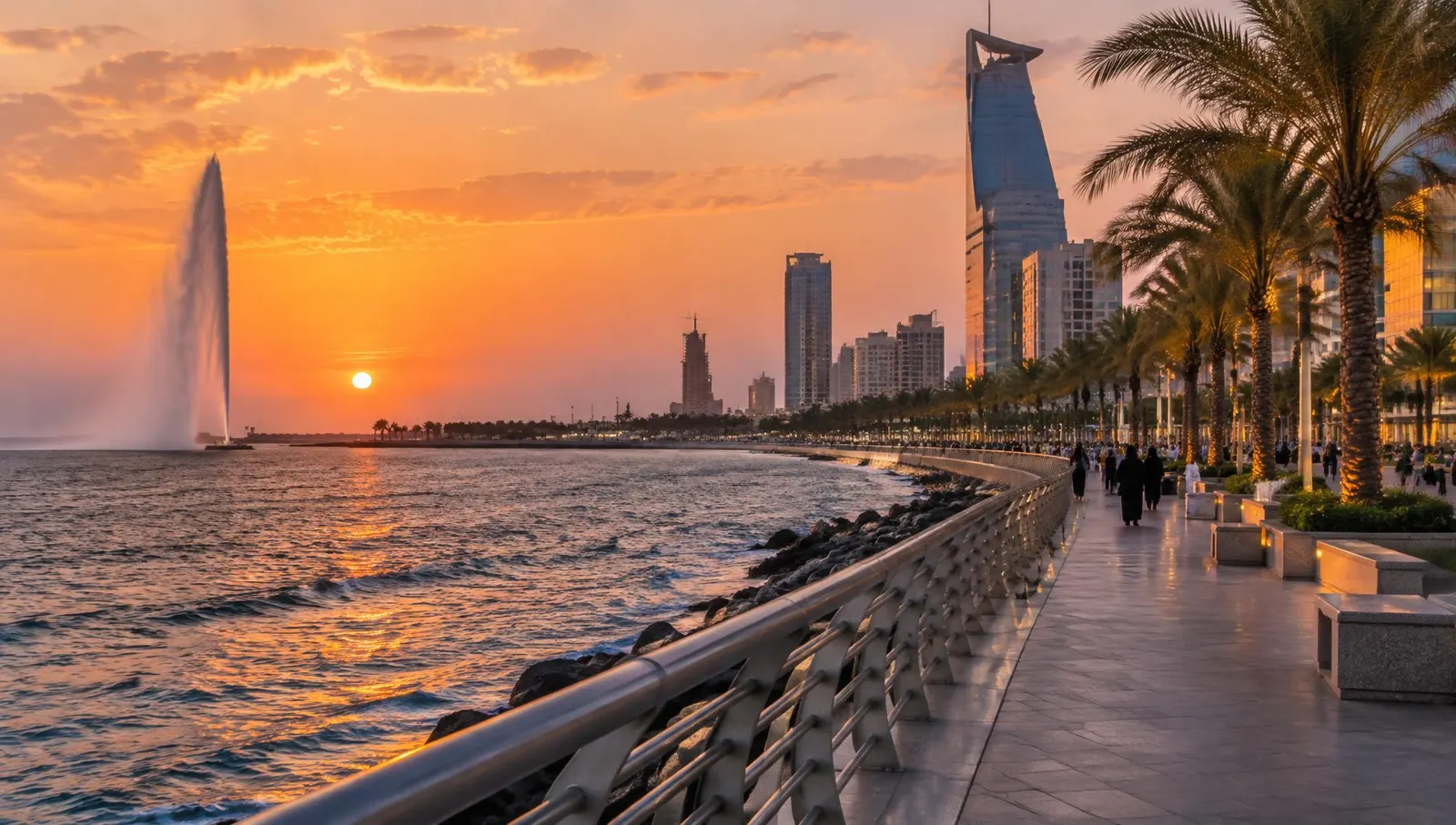
6. Jeddah – The City by the Red Sea
Jeddah is one of Saudi Arabia's most exciting cities.
It is located on the Red Sea and has been an important port and trading city for centuries.
The atmosphere is different from Riyadh.
Here you notice the influence of the sea, trade, and all the cultures that have met in the city throughout history.
Jeddah combines:
historic districts
the Red Sea
restaurants and cafes
art
shopping
beach life
diving
boat trips
The city is also an important transportation hub if you are traveling to other places along the west coast.
7. Al-Balad – Historic Jeddah
The most fascinating part of Jeddah is the old town, Al-Balad.
The area is a UNESCO World Heritage Site.
Here you can wander among old merchant houses, mosques, markets, and characteristic buildings with large carved wooden windows – known as roshan.
Historic Jeddah developed over centuries as a port city and a gateway for pilgrims on their way to Makkah.
This gave the city a mix of people, goods, architecture, and culinary traditions from large parts of the region.
We recommend visiting Al-Balad both during the day and towards the evening.
When the temperature drops and shops, cafes, and streets fill with people, the area takes on a unique atmosphere of its own.
8. The Red Sea – Coral Reefs, Beaches, and Islands
Saudi Arabia has a very long coastline along the Red Sea.
Underwater, there are coral reefs, colorful fish, and rich marine life.
Several areas along the coast are now being developed as exclusive destinations, while there are still places where you can experience relatively untouched coastal areas.
Activities can include:
snorkeling
diving
boat trips
kayaking
beach life
resort stays
island hopping
For many Norwegian travelers, the combination of culture and history at the beginning of the trip and a few relaxing days by the Red Sea at the end will be very attractive.
It also offers a completely different holiday than what many associate with Saudi Arabia.
9. Al-Ahsa – The World's Largest Oasis Landscape
In eastern Saudi Arabia lies Al-Ahsa.
This vast oasis area is a UNESCO World Heritage Site and consists of palm groves, springs, canals, historic buildings, and ancient settlements.
One of the most fascinating things about Al-Ahsa is the contrast.
You are in one of the world's largest desert landscapes, but all around you are green palms and agricultural areas.
In the area, you can visit, among other things:
Al-Qarah Mountain
historic Hofuf
Ibrahim Palace
traditional markets
palm groves
local farms and food producers
Al-Ahsa can be combined with Riyadh and the east coast.
There is also a train connection between Riyadh, Al-Ahsa, and Dammam.
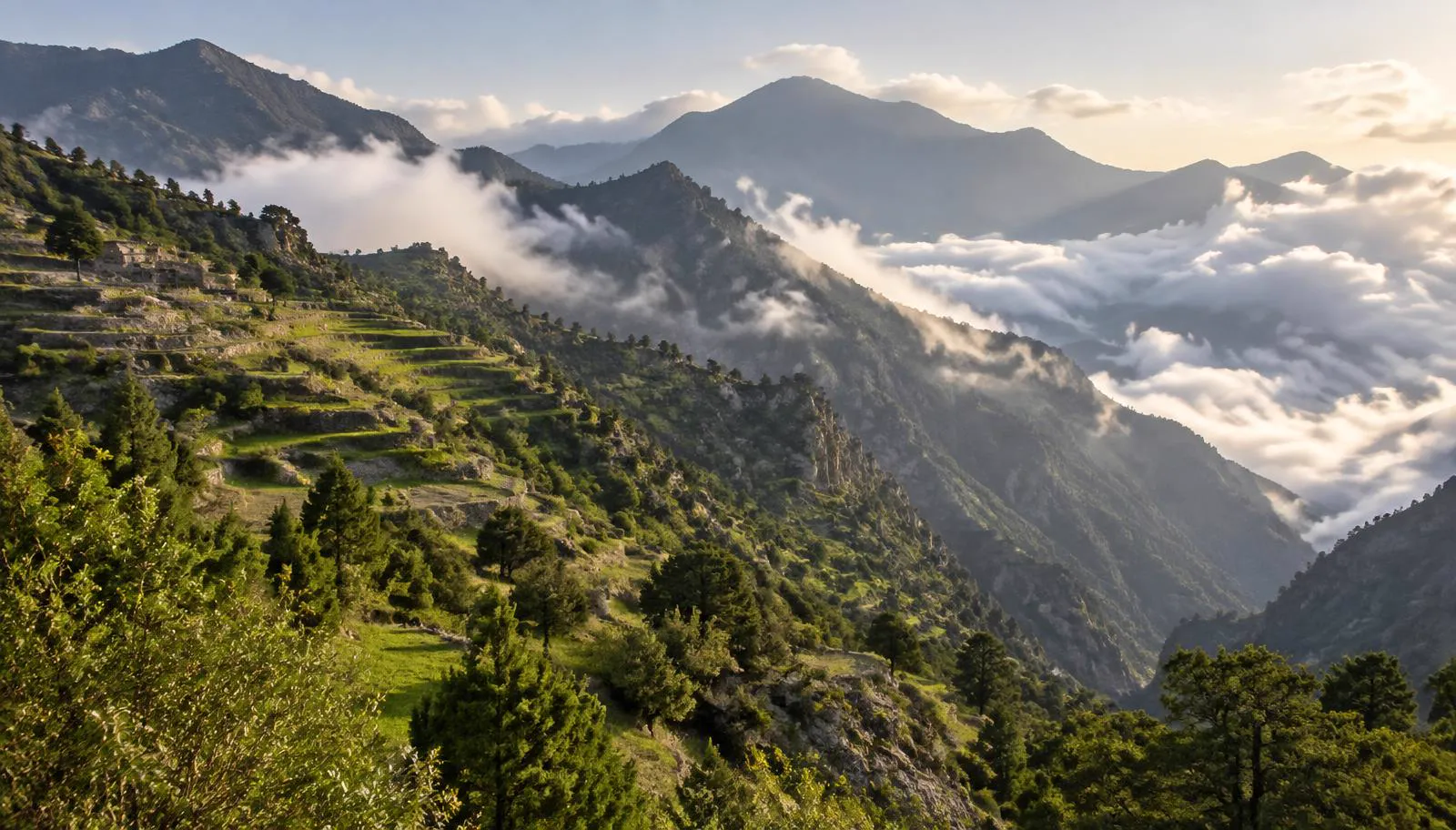
10. Aseer and Abha – The Green Saudi Arabia
Many are surprised the first time they see pictures from Aseer.
Here, the landscape is green and mountainous, and on some days, clouds hang low over the mountainsides.
Abha is the main city and a natural starting point for exploring the region.
Aseer offers:
Sarawat Mountains
lush valleys
viewpoints
cable cars
traditional villages
local food culture
hiking
cooler climate
The region has a significantly milder summer climate than large parts of the rest of Saudi Arabia.
This makes Aseer a popular destination even in the hottest months of the year.
If you think Saudi Arabia is just sand and desert, Aseer will quickly change that picture.
11. Al Soudah – High Above the Aseer Landscape
Near Abha lies Al Soudah.
This mountain area is known for high peaks, cooler temperatures, vegetation, and dramatic views over the valleys below.
Visit Saudi describes Al Soudah as the area with Saudi Arabia's highest peak.
It is a popular place for:
hiking
photography
views
nature
picnics
cool summer days
On some days, fog and clouds surround the mountainsides, creating an atmosphere that is very different from the classic image of Saudi Arabia.
Al Soudah is naturally combined with Abha and other places in Aseer.
12. Rijal Almaa – Historic Mountain Village
Rijal Almaa is one of the most distinctive villages in southwestern Saudi Arabia.
The village has several dozen traditional buildings constructed from stone, clay, and wood.
Some of the houses rise many stories above the landscape.
The architecture, the mountains, and the local culture make Rijal Almaa a completely different destination from the big cities and desert areas further north.
The area is also known for Aseer's characteristic art tradition, Al-Qatt Al-Asiri, with its bright colors and geometric patterns.
Rijal Almaa is particularly well-suited for travelers interested in:
architecture
photography
history
local traditions
village life
The visit can be combined with Abha and Al Soudah.
13. Taif – Mountains, Roses, and Cooler Air
Taif is located in the highlands east of Jeddah and Makkah.
The city's higher elevation provides a milder climate than many surrounding areas.
Taif is particularly famous for the roses that bloom in the spring.
Rose water and rose oil are produced here according to traditions that have deep roots in the area.
Here you can experience, among other things:
rose farms
the mountain areas of Al Shafa and Al Hada
local markets
parks and viewpoints
fruit farms
cooler mountain air
Taif is a good example of how varied the nature on the Arabian Peninsula actually is.
It is also possible to combine Taif with a trip along the west coast.
14. Farasan Islands – Tropical Feel in the Red Sea
Far to the south along the Red Sea coast, off the coast of Jazan, lie the Farasan Islands.
The archipelago consists of more than 170 islands and is known for white beaches, coral reefs, mangroves, birdlife, and rich marine life.
Here you can, among other things:
snorkel
fish
go on a boat trip
watch birds
explore beaches
experience local coastal culture
Farasan is still far less known internationally than many of Saudi Arabia's major attractions.
That is precisely what makes the area interesting.
For travelers who want to get off the classic Riyadh–AlUla–Jeddah route, this can be an exciting alternative.
15. Hail and the Rock Art at Jubbah
In northern Saudi Arabia lies the Hail region.
The area is known for its desert landscapes, mountains, historic trade routes, and some of Saudi Arabia's most important collections of rock art.
At Jubbah, you will find thousands of ancient petroglyphs and rock drawings.
The rock art in the Hail region is a UNESCO World Heritage Site and provides a fascinating insight into the people and animals that lived in the area over thousands of years.
The motifs include:
people
animals
hunting
daily life
symbols
For history and archaeology enthusiasts, Jubbah is one of the most exciting places in the country.
Hail is well-suited for travelers who want to venture a little off the most established tourist routes.
Bonus: Empty Quarter – Rub' al Khali
Although we have already reached 15 places, it is impossible to make a list of Saudi Arabia's greatest experiences without mentioning Rub' al Khali – the Empty Quarter.
This is part of the world's largest contiguous sand desert.
Here you will find enormous sand dunes, silence, and horizons that seem endless.
In the western part lies the ‘Uruq Bani Ma’arid wildlife sanctuary, which is a UNESCO World Heritage Site.
The area protects a spectacular desert landscape and animal species such as the Arabian oryx and sand gazelle.
A trip into the Empty Quarter should be planned with a professional operator, a suitable four-wheel-drive vehicle, local knowledge, and the right safety equipment.
This is not a regular self-drive day trip.
But for adventurous travelers, the experience of standing in the middle of one of the world's largest deserts can be hard to forget.
Which Places Should You Choose for Your First Trip?
With so many sights in Saudi Arabia, it's easy to try to fit in too much.
We do not recommend that.
The distances are large, and the experience is often better if you spend a little more time in each place.
For a first-time trip, this combination is particularly good:
Riyadh → AlUla → Jeddah
This gives you three very different sides of the country:
Riyadh
Modern Saudi Arabia, Diriyah, and the Edge of the World.
AlUla
Desert, Hegra, history, and spectacular landscapes.
Jeddah
Historic Al-Balad, the Red Sea, and a relaxed coastal atmosphere.
If you have more time, the trip can be extended with, for example:
Al-Ahsa
The Red Sea Coast
Aseer and Abha
Taif
Hail
7 Days in Saudi Arabia
With one week, you should limit the number of destinations.
A suggestion could be:
Riyadh – 2 nights
Experience the city, Diriyah, and possibly the Edge of the World.
AlUla – 3 nights
Visit Hegra, Old Town, Elephant Rock, and other highlights.
Jeddah – 2 nights
Experience Al-Balad and the Red Sea.
This will be an active trip, but it provides a good first impression of the country.
10 Days in Saudi Arabia
With ten days, you get more time for the actual experiences.
An example:
Riyadh – 3 nights
AlUla – 3 nights
Jeddah – 3 nights
1 travel day / extra night as needed
This allows for more time for both organized activities and your own explorations.
14 Days in Saudi Arabia
With two weeks, you can begin to experience more of the country's diversity.
A trip could be, for example:
Riyadh → Al-Ahsa → AlUla → Jeddah → Red Sea
Another alternative is:
Riyadh → AlUla → Jeddah → Taif → Aseer
Which route is best depends on the time of year and which experiences are most important to you.
How Do You Get Between the Sights?
Saudi Arabia is large.
It is therefore common to combine several modes of transport.
Flights
Domestic flights are often the fastest solution between regions that are far apart.
Train
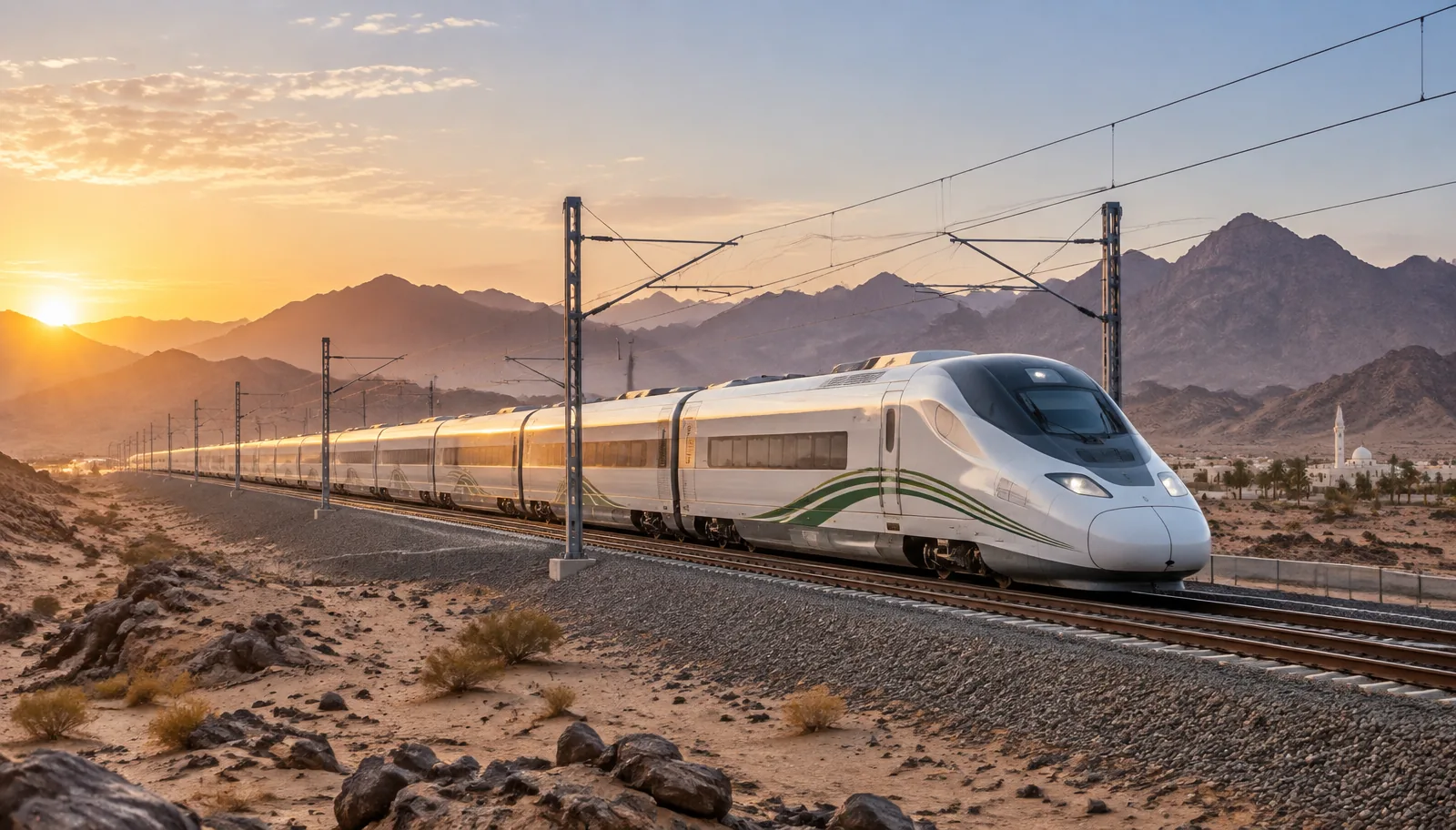
Trains are very practical on certain routes.
The Haramain High-Speed Railway connects Makkah, Jeddah, and Madinah, among others, while SAR has connections between Riyadh and Eastern Saudi Arabia and north from the capital.
A private car with a driver offers great flexibility and is particularly useful for excursions and places without good public transport connections.
Organized Excursions
Places like Hegra, the Edge of the World, and the Empty Quarter are often best experienced with a guide or organized transport.
This provides both more knowledge and simpler logistics.
What is the Biggest Surprise About Saudi Arabia?
For many first-time travelers, the answer is the diversity.
Saudi Arabia is much more than desert.
On a single tour, you can experience:
modern skyscrapers
archaeological sites
2,000-year-old tombs
ancient trading towns
green mountains
enormous sand dunes
oases
coral reefs
beaches
historic villages
It is precisely this diversity that makes the country so well-suited for tours.
Let Saudi Reiser Help You Choose
You don't need to visit all 15 places at once.
In fact, we recommend the opposite.
A good trip is not about checking off as many sights as possible from a list.
It's about choosing the right experiences and having time to enjoy them.
Saudi Reiser can help you put together an itinerary based on:
how many days you have
what time of year you are traveling
budget
hotel standard
interest in culture and history
nature and adventure
beach and relaxation
how active you want the trip to be
We can combine hotels, transport, trains, domestic flights, guides, and experiences into one seamless journey.
Ready to Experience Saudi Arabia?
From Hegra and AlUla to Riyadh's modern skyline, the green mountains of Aseer, and the coral reefs of the Red Sea – Saudi Arabia offers far greater diversity than many expect.
The question, therefore, is perhaps not:
What should you see in Saudi Arabia?
But rather:
What will you choose first?
Tell us how long you want to travel and what kind of experiences you dream of, and Saudi Reiser will help you put together a tour that suits you.
Frequently Asked Questions about Sights in Saudi Arabia
What should you see in Saudi Arabia on your first trip?
For first-time travelers, Riyadh, AlUla, and Jeddah are a very good combination. You get to experience a modern metropolis, historical sites, desert landscapes, UNESCO World Heritage, and the Red Sea on the same trip.
What is the most famous sight in Saudi Arabia?
Hegra in AlUla is among the country's most famous attractions. It was Saudi Arabia's first UNESCO World Heritage Site and is known for its monumental Nabataean tombs carved into the sandstone mountains.
How many days do you need to see Saudi Arabia?
For a first-time trip, we generally recommend between 7 and 14 days. Saudi Arabia is a large country, and it's better to visit a few regions properly than to try to see too much in one trip.
Is AlUla worth visiting?
Yes. AlUla combines spectacular nature with some of Saudi Arabia's most important historical sites. Hegra, Elephant Rock, AlUla Old Town, Dadan, and Jabal Ikmah make the area a natural highlight on many tours.
Are there green areas in Saudi Arabia?
Yes. The Aseer region in the southwest of the country has mountains, forests, valleys, and a much greener landscape than many associate with Saudi Arabia. Abha and Al Soudah are popular starting points.
Can you have a beach holiday in Saudi Arabia?
Yes. Saudi Arabia has a long coastline along the Red Sea with beaches, coral reefs, islands, snorkeling, diving, and a growing number of resorts.
Which UNESCO sites can you visit in Saudi Arabia?
Saudi Arabia has several UNESCO World Heritage Sites, including Hegra, At-Turaif in Diriyah, historic Jeddah, the Al-Ahsa Oasis, and the rock art in the Hail region.
Which places do you want to experience?
Tell us how long you want to travel and which experiences appeal to you most. Saudi Reiser will help you put together a tailor-made itinerary.
Planning a holiday in Saudi Arabia? Here you'll find our complete guide to visas, the best time to travel, AlUla, Riyadh, Jeddah, transportation, culture, and practical travel tips.