Jeddah – Complete Travel Guide to the City on the Red Sea
Discover historic Al-Balad, the Jeddah Corniche, King Fahd's Fountain, the Red Sea, seafood, beach life, and the best things to do in Jeddah.
Published:20 min read
Written by Saudi Reiser
Historic Al-Balad, the Red Sea, beach life, seafood, the Corniche, and some of Saudi Arabia's most atmospheric neighborhoods.
On the Red Sea coast lies one of Saudi Arabia's most fascinating cities.
Jeddah.
For centuries, the city has been a trading hub, a port, and a gateway for travelers and pilgrims heading further into the Arabian Peninsula.
This history is still palpable.
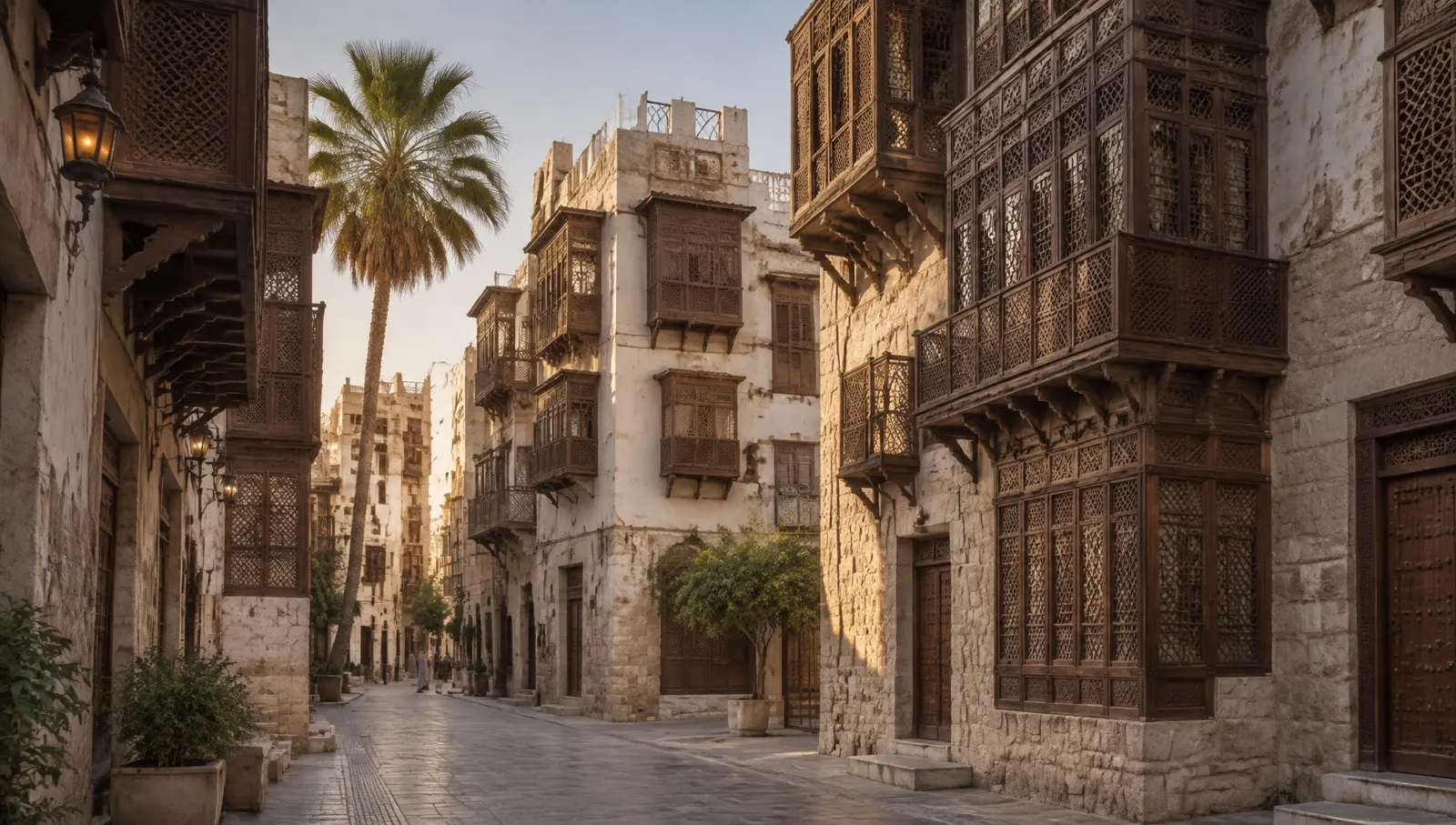
In historic Al-Balad, you can walk among old merchant houses built from coral stone, traditional souks, and buildings with carved roshan windows.
Just a few kilometers away, you'll find a modern metropolis with hotels, restaurants, shopping, beaches, and a long Corniche along the Red Sea.
Jeddah is precisely this mix:
history and modern city life → old merchant houses and new hotels → traditional markets and modern restaurants → culture and beach life
For many Norwegian travelers, Jeddah is also a natural stop on a larger tour through Saudi Arabia.
In this guide, Saudi Reiser shows you the best things to see and do in Jeddah, how long you should stay, where you should stay, and how the city can be combined with the rest of the country.
Between the historic buildings, you will still find:
shops
markets
mosques
cafes
restaurants
street vendors
local residents
This makes the visit far more interesting than if the area had only been preserved for tourists.
2. The Historic Houses of Al-Balad
One of the most characteristic things about Al-Balad is its architecture.
Many of the old merchant houses were built from coral stone from the Red Sea.
The facades feature large, carved wooden balconies and windows known as roshan or rawasheen.
These were not just decorative.
They also helped create shade, privacy, and better ventilation in the hot and humid climate.
Some buildings rise several stories above the narrow streets.
As you wander through Al-Balad, you therefore get a good impression of what a wealthy trading city on the Red Sea might have looked like before modern high-rises and air conditioning.
3. Nassif House
One of the most famous historic houses in Al-Balad is Nassif House.
The building belonged to a wealthy merchant family and holds an important place in Jeddah's history.
It is known for its traditional Hijazi architecture and its characteristic wooden windows.
The building also has historical connections to King Abdulaziz, the founder of modern Saudi Arabia.
Accessibility and opening hours may vary.
Therefore, check the current information before your visit.
Even if you can't enter the house itself, the surrounding area is a natural part of a walk through Al-Balad.
4. Souq Al Alawi
If you want to get a feel for the old trading life in Jeddah, you should visit Souq Al Alawi.
The market is located in Al-Balad and is one of the most famous traditional markets in the city.
Here you can find:
spices
perfume
oud
incense
textiles
clothing
jewelry
dates
sweets
traditional products
souvenirs
It's also a great place to just walk around and observe life.
The area becomes particularly atmospheric in the late afternoon and evening when the temperature drops and the streets fill with people.
5. Al-Balad at Night
Although Al-Balad is interesting during the day, we recommend experiencing the area in the evening as well.
When the sun goes down, the atmosphere changes.
The lights are turned on between the historic buildings.
Shops stay open.
Cafes and restaurants fill up.
The scent of coffee, spices, and food blends with the sounds from the markets and streets.
A good plan is to visit the area in the late afternoon and stay until after dark.
This way, you get to experience two completely different sides of Al-Balad in one visit.
6. Jeddah Corniche
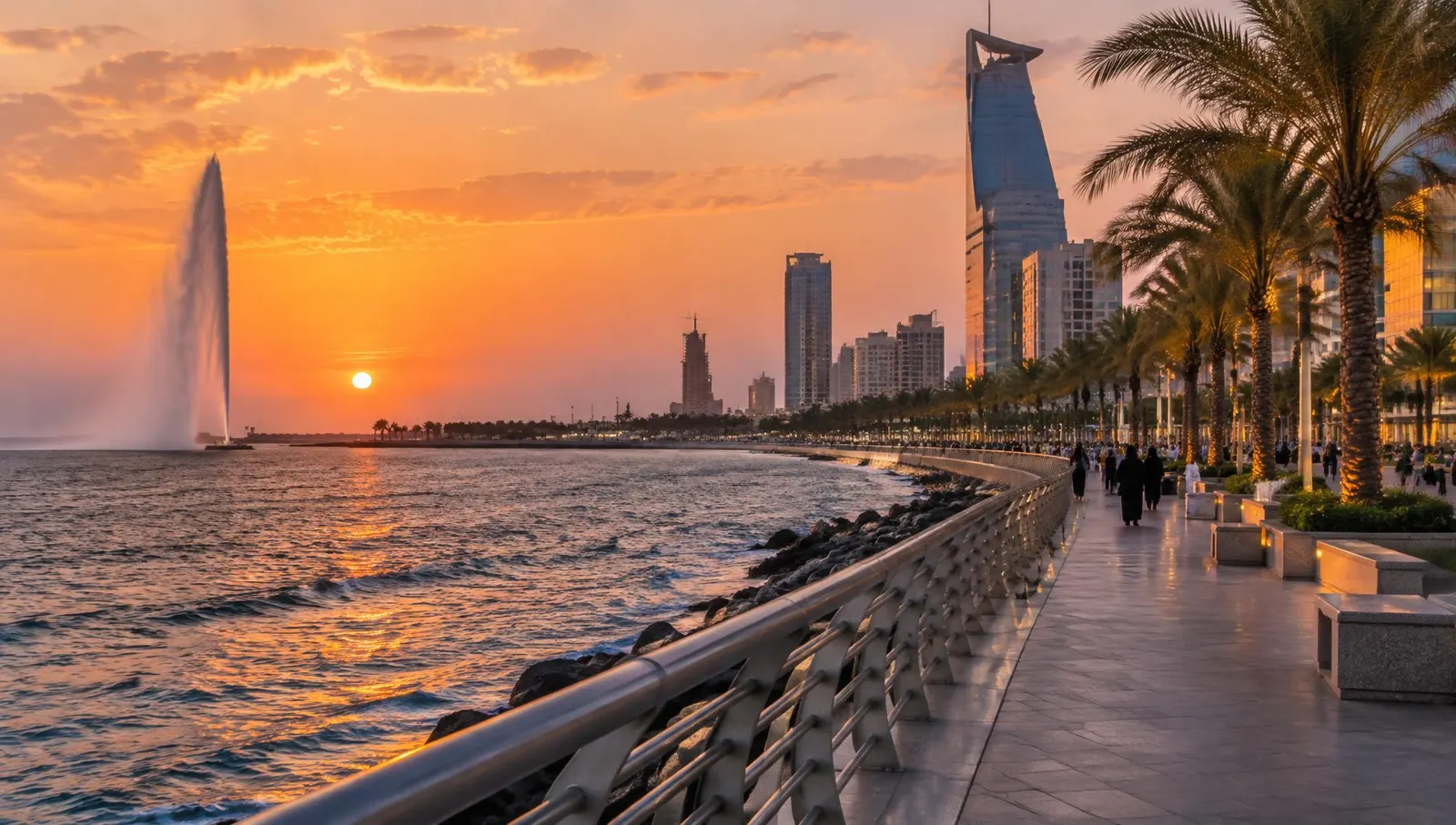
The Jeddah Corniche is the city's long promenade along the Red Sea.
Both locals and visitors come here to walk, cycle, meet friends, or watch the sunset.
Along the Corniche, you will find, among other things:
parks
promenades
seating areas
cafes
restaurants
art
playgrounds
views of the Red Sea
This is a great place to experience a more relaxed side of Jeddah.
The area is especially popular in the evening.
When the temperature drops, the promenade fills with families, joggers, and people enjoying the evening by the sea.
7. King Fahd's Fountain
One of Jeddah's most famous landmarks is located out in the Red Sea.
King Fahd's Fountain.
The fountain shoots water more than 300 meters into the air and is considered the tallest of its kind in the world.
It can be seen from large parts of the Corniche.
The experience is particularly stunning after sunset when the fountain is lit up against the dark sky.
One of the best places to see it is from Al Hamra Corniche.
This is an easy attraction to combine with dinner or an evening stroll along the sea.
8. Al Rahma Mosque – The Floating Mosque
North along Jeddah's coast lies Al Rahma Mosque.
It is often known as the Floating Mosque.
The mosque stands on pillars above the water of the Red Sea.
At high tide, it can therefore look as if the building is floating on the sea.
The white architecture, the blue-green dome, and the location make this one of Jeddah's most photographed spots.
Sunrise and sunset are particularly beautiful times to visit the area.
Visitors should dress respectfully and be considerate of prayers, religious activities, and current visiting rules.
9. The Red Sea
Jeddah is not just a city by the sea.
The Red Sea is an important part of the journey itself.
Along the coast, there is clear water, coral reefs, and a rich marine life.
Activities can include:
snorkeling
diving
boat trips
fishing
kayaking
water sports
beach stays
Many are surprised by how good the diving opportunities are off the west coast of Saudi Arabia.
The coral reefs and warm water make the Red Sea interesting for both beginners and experienced divers.
10. Diving in Jeddah
Jeddah has long had an active diving community.
There are several operators that organize diving trips from the city.
Depending on your experience, you can see:
coral reefs
tropical fish
underwater landscapes
wrecks
dives for beginners
dives for certified divers
For first-time visitors, an organized snorkeling or diving trip can be a very nice way to experience the Red Sea.
Always choose a reputable and certified operator.
Conditions, availability, and which dive sites are used may vary.
11. Beach Life in Jeddah
Jeddah has several beach and coastal areas.
Some are public, while others belong to private beach clubs, hotels, or resorts.
Private areas can offer:
sunbeds
pools
restaurants
water sports
beach facilities
family areas
Rules for attire and use of the beach can vary between public and private areas.
If the beach is an important part of your trip, we recommend choosing a hotel or beach club based on the exact experience you want.
12. Obhur
North of central Jeddah lies Obhur.
This area is known for its sea, marinas, beach clubs, and water sports.
Here you will find several options for:
boat trips
snorkeling
diving
jet skiing
beach clubs
resort stays
Obhur is a good choice if you want to combine a few days of city experiences with more relaxed time by the sea.
It is also a natural starting point for several marine activities.
13. Jeddah's Art Scene
Jeddah has long been an important art city in Saudi Arabia.
Along parts of the Corniche, there are large outdoor artworks and sculptures.
The city also has galleries, art centers, and cultural venues.
A well-known modern art center is Hayy Jameel.
Here, events include:
art exhibitions
film
cultural programs
workshops
creative events
What is on display varies throughout the year.
For art enthusiasts, this can be a fine contrast to the historical attractions in Al-Balad.
14. Al Tayebat International City
If you want to learn more about the history of Jeddah and Saudi Arabia, Al Tayebat International City is an interesting stop.
The complex has a large collection related to, among other things:
Saudi culture
Islamic history
traditional clothing
historical artifacts
architecture
local traditions
The building itself is also interesting and inspired by traditional Hijazi architecture.
A visit is well-suited if you want a more comprehensive insight into local culture and history.
Check opening hours before you go.
15. Jeddah Waterfront
The modern waterfront shows a completely different side of the city than Al-Balad.
Here you will find open areas along the sea, promenades, green spaces, and modern facilities.
This is a great place for:
walks
cycling
sunsets
family time
photography
relaxation
It is also a nice place to see how Jeddah turns towards the Red Sea as a modern coastal city.
Food in Jeddah
Jeddah is one of the most exciting food cities in Saudi Arabia.
The city's long history as a trading port has influenced its food culture.
Over the centuries, people from Africa, Asia, and other parts of the Middle East have come here.
This is noticeable in the food.
You will find, among other things:
Hijazi dishes
seafood
Yemeni food
Indian and Pakistani influences
East African flavors
traditional Saudi food
modern international restaurants
For food enthusiasts, Jeddah is a very interesting city.
Seafood in Jeddah
When you're by the Red Sea, you should try the seafood.
Fish and shellfish are an important part of Jeddah's food culture.
At some restaurants, you can choose fresh fish and have it prepared according to local traditions.
Typical choices may include:
grilled fish
fried fish
shrimp
rice dishes with seafood
spiced fish dishes
Seafood combined with a view of the Red Sea is a classic Jeddah experience.
Saudi and Hijazi Food
Jeddah is located in the Hijaz region.
The local food culture therefore has some of its own distinctive features.
Dishes and flavors can be influenced by the many cultures that have passed through the city.
You can try, for instance:
saleeg
kabsa
mandi
mutabbaq
fish and rice
sambousek
Arabic coffee
dates
local sweets
Don't spend your entire trip at international restaurants.
Some of the most interesting food experiences are found in local places.
Cafes and Modern Restaurant Scene
Jeddah also has an extensive modern cafe and restaurant scene.
You can find everything from small specialty coffee shops to exclusive restaurants.
Areas along the Corniche, newer neighborhoods, and several hotels have a wide selection.
In the evening, the restaurant scene is an important part of the city's social life.
Many places stay open late.
This fits well with the climate, where the evening is often the most pleasant part of the day.
Shopping in Jeddah
Jeddah offers both traditional markets and modern shopping.
For traditional products:
Al-Balad and Souq Al Alawi
Here you can look for:
oud
perfume
incense
spices
textiles
gold and jewelry
dates
traditional clothing
souvenirs
For modern shopping, there are several large malls and international brands.
When is the best time to travel to Jeddah?
Jeddah has a warm coastal climate.
Due to its location on the Red Sea, the humidity is often higher than in Riyadh and AlUla.
For many Norwegian travelers, the period from approximately November to March will be the most comfortable.
November to February
This is a very good period.
Temperatures are normally more comfortable for:
sightseeing
Al-Balad
the Corniche
boat trips
outdoor activities
The evenings are often pleasant.
March and April
This can also be a good time.
The temperature rises gradually, but many days are still good for sightseeing.
Summer
The summer is hot and humid.
This means that sightseeing should often be planned for:
early in the morning
late in the afternoon
in the evening
Hotels, restaurants, and indoor attractions naturally have air conditioning.
For a first-time tour, many prefer the winter half of the year.
How many days do you need in Jeddah?
For most, we recommend two to four nights.
2 nights
With two nights, you can prioritize:
Al-Balad
the Corniche
King Fahd's Fountain
a good seafood dinner
This is suitable if Jeddah is the last stop on a larger tour.
3 nights
Three nights is our recommendation for many.
This gives you time for:
Al-Balad
the Corniche
the Floating Mosque
seafood
shopping
a Red Sea activity or beach time
4 nights
With four nights, you can have a more relaxed schedule.
You can add:
a boat trip
snorkeling or diving
a beach club
art and culture
extra time in Al-Balad
This is a good fit if Jeddah is meant to be both the city and relaxation part of your trip.
Suggestion: 3 Days in Jeddah
Day 1 – Al-Balad
Start slowly and head to historic Jeddah.
Explore:
old merchant houses
Souq Al Alawi
the Nassif House area
traditional streets
small shops
Feel free to stay until after sunset.
End the evening with dinner in or near Al-Balad.
Day 2 – The Corniche and the Red Sea
Start the day along the coast.
Visit Al Rahma Mosque if it fits with opening hours and visiting rules.
Continue along the Corniche and the waterfront.
In the afternoon, you can choose:
a boat trip
a beach club
snorkeling
relaxing at the hotel
In the evening, see King Fahd's Fountain and have seafood.
Day 3 – Culture, Shopping, and Modern Jeddah
Visit, for example:
Al Tayebat
Hayy Jameel
modern districts
shopping
Spend the rest of the day at a restaurant, cafe, or relaxing.
This provides a good balance between history, culture, and the Red Sea.
How do you get around in Jeddah?
Jeddah is a large city.
The distances between Al-Balad, the Corniche, Obhur, and the airport can be significant.
Available modes of transport are:
taxi
app-based transport services
private car with driver
rental car
organized transport
For a customized tour, we often recommend private transport for days when several attractions are to be combined.
It saves time and simplifies logistics.
Where should you stay in Jeddah?
The choice of area should depend on what you want to do.
Corniche / Waterfront
A good fit if you want:
sea views
modern hotels
evening walks
easy access to the Red Sea
This is a great choice for first-time visitors who want comfort and a coastal atmosphere.
Al-Balad and nearby areas
Suitable for those who prioritize:
history
culture
markets
local atmosphere
The selection of hotels is different from along the Corniche, so choose according to your desired comfort level.
Northern Jeddah / Obhur
Suitable if you want:
beach
marina
water sports
a resort feel
This can be particularly interesting if the Red Sea is an important part of your stay.
Jeddah for Couples
Jeddah works well for couples.
A day could, for example, consist of:
historic Al-Balad → coffee in the old town → sunset over the Red Sea → seafood dinner with a view of the water
Other good experiences for couples can include:
a boat trip
a beach club
spa
fine dining
art and culture
a hotel by the sea
Combined with AlUla, you get a very varied and romantic tour.
Jeddah with Children
Jeddah can also work very well for families.
Children may particularly enjoy:
beaches
boat trips
snorkeling
the waterfront
parks
marine activities
shopping and family entertainment
Historic Al-Balad can also be exciting, as long as the visit isn't too long.
During hot periods, activities should be planned around the temperature.
What should you wear in Jeddah?
Jeddah is perceived by many as relatively relaxed, but local norms still apply.
Tourists should dress respectfully.
For both men and women, it is wise to choose clothes that are not very short or revealing.
Foreign women do not normally need to wear an abaya in regular public areas.
At religious sites, you should follow the applicable local rules.
At private beach areas, dress codes may be different from public beaches.
Alcohol in Jeddah
Alcohol is prohibited for regular tourists in Saudi Arabia.
You should not bring alcohol into the country.
Hotels and restaurants instead offer, among other things:
mocktails
fresh juice
specialty coffee
tea
non-alcoholic beverages
Jeddah's restaurant scene has a wide variety of creative non-alcoholic options.
Jeddah and Makkah
Jeddah is the main international point of entry for many travelers heading to Makkah.
King Abdulaziz International Airport has a direct connection to the Haramain High-Speed Railway.
However, Makkah is reserved for Muslims.
Non-Muslim tourists can therefore not visit the city.
For Muslim travelers, Jeddah can be a very convenient starting point before the journey on to Makkah.
But Jeddah is worth visiting for different reasons than Riyadh and AlUla.
Riyadh is largely about modern Saudi Arabia and the country's history as a state.
AlUla is about archaeology, landscapes, and the desert.
Jeddah is about trade, the sea, culture, and people.
It is a city that has welcomed travelers from all over the world for centuries.
This is still noticeable in the:
architecture
food
markets
port
city life
Add the Red Sea, and you get a destination that can combine a cultural holiday and relaxation in the same place.
Let Saudi Reiser Plan Your Jeddah Stay
Jeddah can be visited alone, but works best as part of a larger Saudi journey.
Saudi Reiser can help with:
hotels
flights
airport transfers
private transport
a guided tour of Al-Balad
Red Sea experiences
snorkeling and diving
beach stays
restaurant suggestions
train to Madinah
combination with AlUla
combination with Riyadh
a complete tour
We can put all the pieces together so that transport, hotels, and experiences fit together naturally.
Ready to Experience Jeddah?
Jeddah is a city you should experience at a leisurely pace.
Get a little lost in the old streets of Al-Balad.
Drink coffee as evening descends.
Watch the sun set over the Red Sea.
Eat fresh fish.
Take a walk along the Corniche.
And take some time to feel the contrast between the historic trading city and the modern coastal city growing up around it.
For many, Jeddah becomes one of the most pleasant surprises on their journey through Saudi Arabia.
Add the following FAQ after the main article.
Use the existing FAQ accordion component if available.
Frequently Asked Questions about Jeddah
How many days do you need in Jeddah?
For most, we recommend two to four nights. Three nights normally provide ample time for Al-Balad, the Corniche, the Red Sea, food experiences, and some of the city's main sights.
What should you see in Jeddah?
The main attractions include historic Al-Balad, Souq Al Alawi, the Jeddah Corniche, King Fahd's Fountain, and Al Rahma Mosque. We also recommend setting aside time for the Red Sea.
Is Al-Balad worth visiting?
Yes. Al-Balad is Jeddah's historic center and a UNESCO World Heritage site. The area is known for its traditional coral stone buildings, carved roshan windows, markets, and its history as a trading and pilgrimage city.
When is the best time to travel to Jeddah?
For many travelers, November to March is the most comfortable period. The summer can be very hot and humid, while the winter months are normally better for sightseeing and outdoor activities.
Can you swim in Jeddah?
Yes. There are public and private coastal areas, beach clubs, and resorts. Facilities and rules vary, so choose a beach or hotel based on your desired experience.
Is Jeddah good for diving?
Yes. The Red Sea off the coast of Jeddah has coral reefs and rich marine life. Several local operators offer snorkeling and diving for both beginners and certified divers.
Can you travel by train from Jeddah to Madinah?
Yes. The Haramain High-Speed Railway connects Jeddah and King Abdulaziz International Airport with Madinah, among other places.
Can non-Muslims travel from Jeddah to Makkah?
Makkah is reserved for Muslims. Non-Muslim tourists must therefore plan their itinerary outside of Makkah.
Can Jeddah be combined with AlUla?
Yes. Jeddah and AlUla are an excellent combination. Jeddah offers coast, history, and food, while AlUla offers Hegra, desert landscapes, and archaeology.
Plan your trip to Jeddah
Do you want to combine historic Al-Balad and the Red Sea with AlUla, Riyadh, or other parts of Saudi Arabia? Tell us when you want to travel, and Saudi Reiser will help you with a customized proposal.
Planning a holiday in Saudi Arabia? Here you'll find our complete guide to visas, the best time to travel, AlUla, Riyadh, Jeddah, transportation, culture, and practical travel tips.